





In 2032 there will be a lot of of visitors to SE Queensland for the Olympics
Many of these will want to see something of our wildlife while they are here
Scroll down to find free downloadable pdfs of all webinars that have already been aired.
Next webinar – POSTPONED!
NOTE: all future webinars in this series are now postponed until late 2026 or2027 and onwards
Scroll down for links to free pdf downloads of previous webinars
3.00pm Monday, 19 November 2026:
POSTPONED
Bandicoots and carnivorous marsupials

These are not so likely to be seen by visitors, but if talking about our local fauna it will still be of interest to nature-loving travellers.
Even many Australians are unaware that we have small relatives of the Tasmanian Devi living in the forests of SE Qld, ranging from mouse-size to cat-size. The most common, the antechinus, may be seen at night around some ecolodges or campgrounds and mistaken for mice, but they are very different from mice in many ways.
Bandicoots are common, as are the little conical holes they leaving in the ground after digging for grubs, roots and fungi, but as they are strictly nocturnal they are not often seen by visitors unless they are on nocturnal tours or camping overnight in areas occupied by bandicoots. They show some physical similarities with carnivorous marsupials, and some with herbivorous marsupials, which seems fitting as they eat both plant and animal material.
Scroll down for details of joining Zoom
We don’t want crowds of people disturbing our wildlife, so one of our messages has to be how to “tread lightly”.
But it’s an excellent opportunity to let international folk know there is a lot more than kangaroos, koalas and kookaburras here. And even a lot of our local residents, including those in tourism businesses often don’t realise the variety of species we have in our district, or how special they are.
Some of our local creatures deserve be far more famous than they are. One film producer asked me if I could tell her about a cute animal in our district that is the target of conservation efforts. I immediately mentioned the greater glider, but she said that wouldn’t do because it’s not well known enough to sell to people in France or Japan.
So here’s an opportunity to make some of them a bit more famous! Famous internationally and also locally. And maybe get more folk involved in citizen science exploring what each species needs to survival into the future.

Image from Scenic Rim Wildlife Ecology Centre, Araucaria Ecotours
Many Scenic Rim residents are surprised to find what they have living nearby. One of the major aims of WPSQ when it was first developed was public education about Queensland’s wildlife. As David Attenborough once said:
“No one will protect what they don’t care about; and no one will care about what they have never experiened”
The Scenic Rim itself, along with the NE corner of NSW, is part of the region boasting the third highest biodiversity in Australia. We have many of the famous species here – kangaroos, koalas, platypus, kookaburras, wedge-tailed eagles, lyrebirds, bowerbirds, carpet pythons etc. Also many kinds of habitat: various forms of rainforest and eucalypt forest, sheoak-dominant riparian vegetation, creeks, rivers, mountain heath, brigalow … We are also close to other regions such as the Gold Coast, with whales, turtles, dugongs, coral, mangroves and tea tree wetlands. True we don’t have cassowaries, wombats, Tasmanian devils, red kangaroos, emus or penguins, but for any nature-lover visiting our country for a short time we do have an amazing diversity to offer!
Hence, along with Wildlife Tourism Australia and in communication with other branches of Wildlife Queensland, we are about to launch a series of short webinars on wildlife that can be seen within a short drive from Brisbane (and will also mention a few that are not so easy to see but we think would be good for people to know about).

These webinars will run at 3.00pm on the third Monday of every month over the next couple of years, starting from July 2025.
Join Zoom Meeting
Join Zoom Meeting
https://us06web.zoom.us/j/86777923627?pwd=SEcGmG2MEWrzYasg6mLp3sKF1O8FmT.1
Meeting ID: 867 7792 3627
Passcode: 971533
Schedule for this year (2025):
21 July The amazing diversity of wildlife in southeast Queensland. Do you understand WHY it is part of the region that has the third highest biodiversity in Australia? Our variety of habitats? Do you know about the species that reach their northern or southern limits here, or are found nowhere else except SE Qld and neNSW? The iconic and famous Aussie creatures we have here and so many lesser-known ones that maybe should be famous?
SEQ Wildlife Webinar 1 pdf abbrev- a wonderful wildlife region (minimized)
18 August Platypus and Echidna: laying eggs is just the start of their oddities! Do you know how they use electricity, what colour a platypus glows under uv light, and the many reasons we should NEVER refer to echidnas as porcupines?
Wildlife SEQ 2 Monotremes Monotremes Part 1
Platypus_conservation_Qld_2025 Monotremes Part 2 (platypus)
f83dcede-99d6-47fb-9777-0c5f19dca4fb Monotremes Part 3 (echidna)
15 September Kangaroos, wallabies and potoroos. No, wallabies are not all alike! And there are more species to be seen around the Qld/NSW border than in any other part of Australia . Some like rocky mountain slopes, some prefer eucalyptus forests forest with plenty of grass, in both rural and suburban areas, while others live under dense rainforest. Eastern grey kangaroos (which are called Macropus giganteus for a reason!) can be found in great numbers in some easily-reached places. We were joined by Dr David Croft (from ResearchGate: “After completing a PhD at the University of Cambridge, David has had a long career at UNSW teaching subjects in vertebrate biology, animal behavior and ecology, and natural resource management in the arid lands. He has published research on invertebrates, various marsupials, sheep, marine mammals, and primates. His specialty is the behavioral ecology of the kangaroos and their kind with a recent focus on interactions with people in livestock enterprises, on roads, and in wildlife tourism.” David was the founder of RooTourism, which offers nature-lovers a great amount of information on macropods (kangaroos, wallabies and relatives). with hints on where to see them.
20 October Koala. It’s not hard to see why they are, long with kangaroos, the most popular of our animals with international guests, and they’re found in the wild only in eastern Australia )(tending west safari as Adelaide). Do you know about the unusual features to look for on their hands and feet? How to look for signs that they have recently been around even if proving a bit elusive? What season they’re most active?
17 November Gliders and other possums. We have five species of gliding possum in the region, arguably as cute as koalas and they soar through the air! (well glide actually). None are easy to find in the wild. Would you like a few tips on increasing your chances of seeing them, and how to ensure you don’t disturb them? Can you explain the differences between the opossums of the Americas and the possums of Australia? What do they eat (it’s not the same for all species)? Which ones have successfully colonised our suburbs and which are strictly forest-dwellers? How do you tell the various species apart?
Wildlife SEQ 5 possums gliders
Webinars in 2026
19 January. Bandicoots and carnivorous marsupials
16 February. Bats large and small.
16 March. Rakali and other rodents
20 April Whales, dolphins and dugongs
18 May Bowerbirds and catbirds
15 June Honeyeaters
… to be continued
2027 – reptiles, frogs and fish
2028 – invertebrates (butterflies, glow worms, soldier crabs etc.), plants needed by wildlife
2028 and beyond …. TBA
A summary of information from each webinar will the be posted on both this website and theWIdlife Tourism Australia website, including:
- species
- special features of the species
- behaviour
- ecological roles
- endemism (whether found only I our region, only in eastern Australia, etc.)
- conservation status
- where to see them, both in the wild and in well-run captive situations (we won’t be saying where to see the rarest and most vulnerable, or those which could be targets for poachers – the blackmarket pet trade is an on-going problem)
- how to watch them without disturbing them
Remember:
These webinars will run at 3.00pm on the third Monday of every month over the next couple of years, starting from July 2025.
For details including Zoom link please contact Ronda on scenicrim@wildlife.org.au
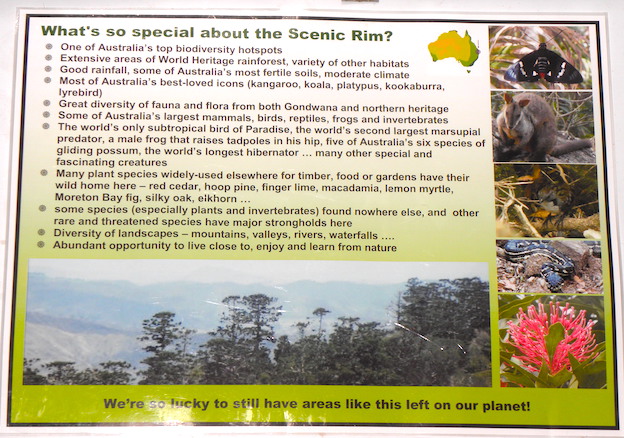
Image from Scenic Rim Wildlife Ecology Centre, Araucaria Ecotours
Webinars that have already happened:
SEQ Wildlife Webinar 1 pdf – a wonderful wildlife region
Wildlife SEQ 5 possums gliders
——–